
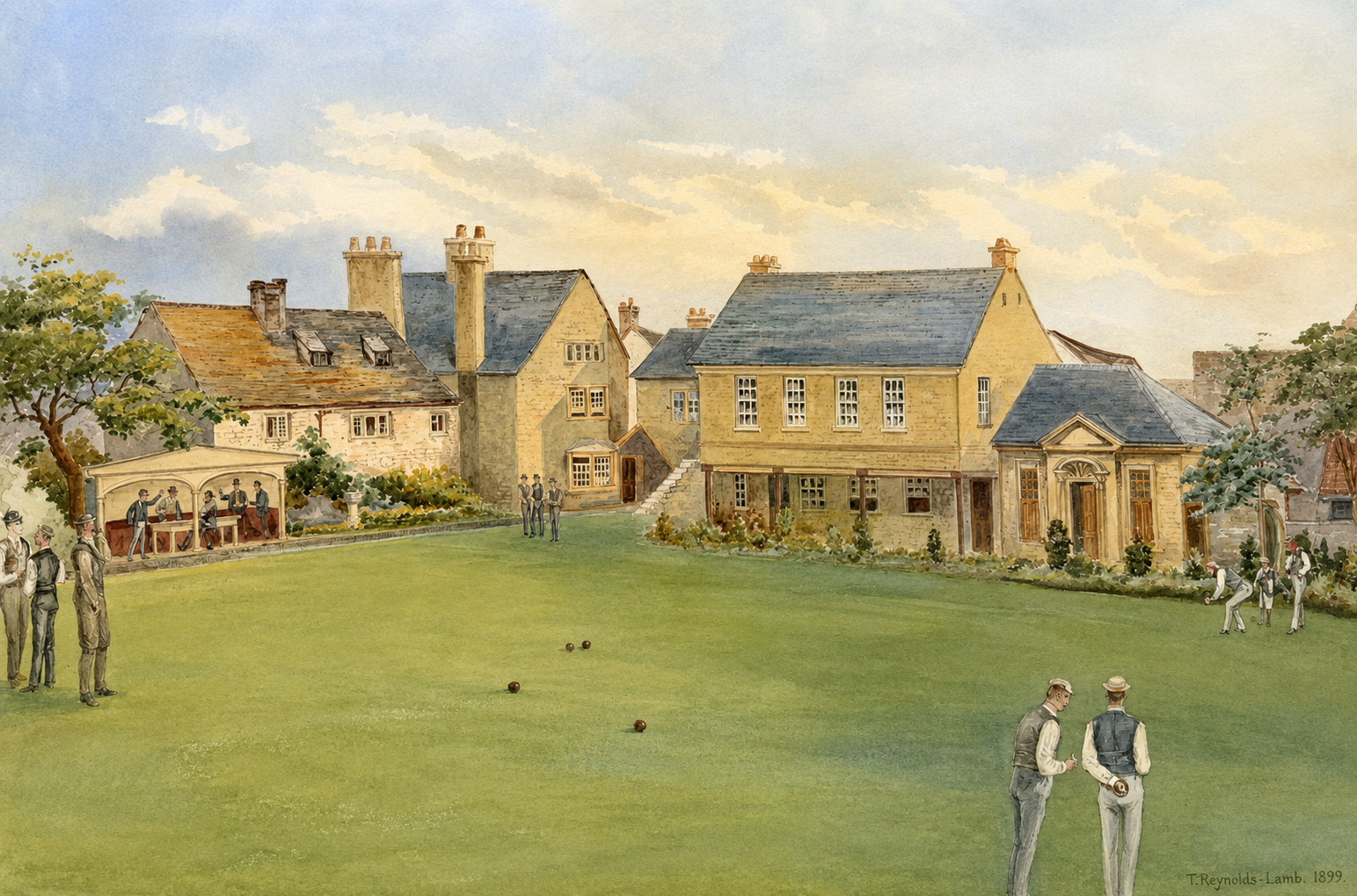
For more than 300 years, Mansfield Bowling Club has been at the heart of the local community.
Established in 1700, we continue to provide friendship, competition and community for bowlers of all ages and abilities.
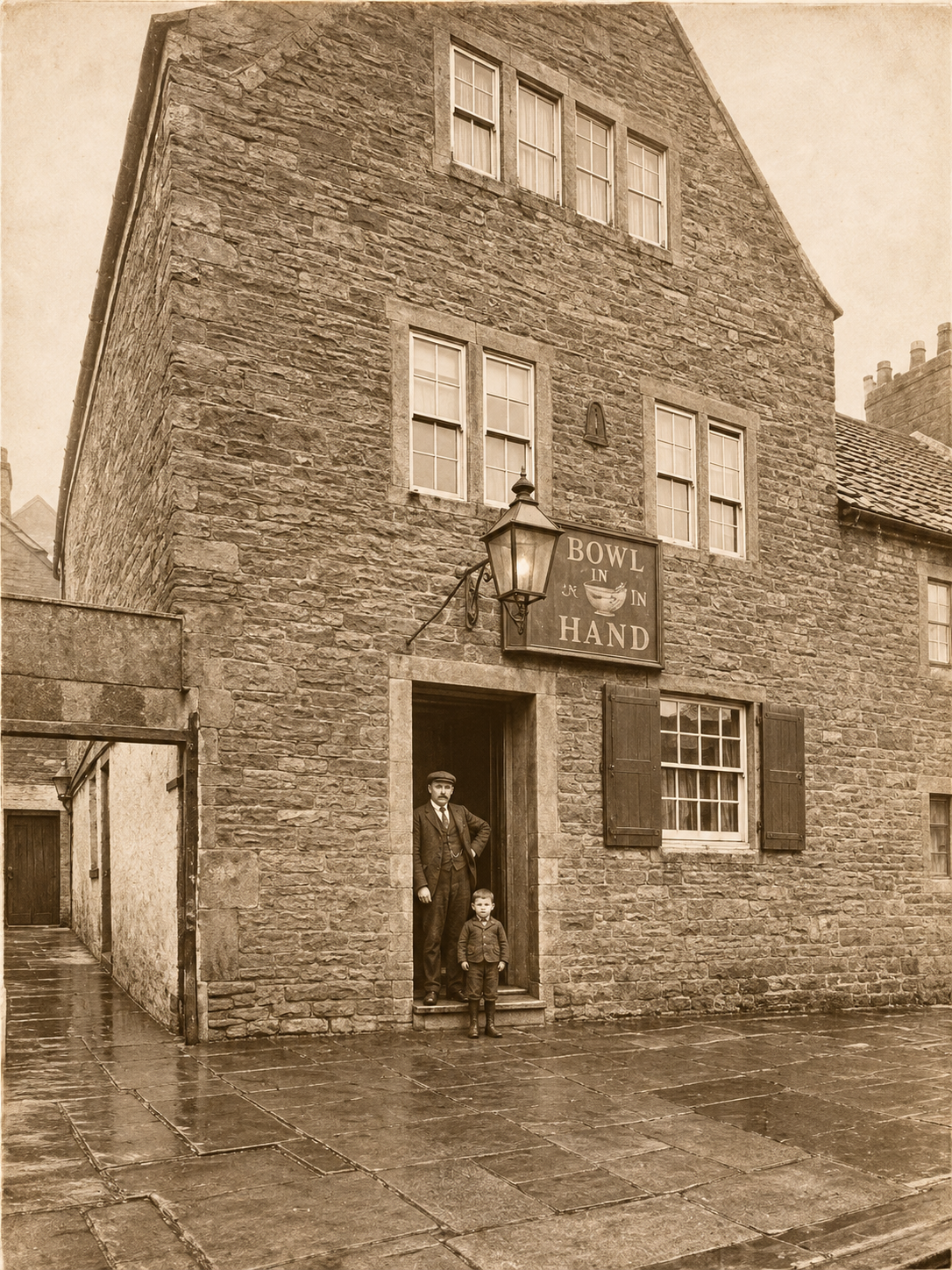
Bowl in Hand Pub, Mansfield
c.1700 · Early Origins
The club's earliest years are closely intertwined with the history of the Bowl in Hand and the surrounding area. Historical evidence suggests that an earlier inn known as The Bowling Green existed on the site by the mid-eighteenth century, supporting the belief that organised bowling had been established in Mansfield long before the Victorian era.
Further evidence of this early association dates to 1823, when an application for an alcohol licence was made to Mansfield Magistrates' Court by a local public house. Records from this period also refer to a bowling club in the vicinity, providing further evidence of the sport's longstanding presence in the area.
Later in the nineteenth century, Mansfield Brewery granted Mansfield Bowling Club a renewable one-year lease on a parcel of land behind one of its public houses, providing a more formal arrangement for the club's bowling green.
While no surviving document has yet been found to confirm the club's exact date of foundation, its tradition of "Est. 1700" reflects the longstanding association between bowling and this part of Mansfield, a heritage that continues to be celebrated today.
1899 · Victorian Mansfield
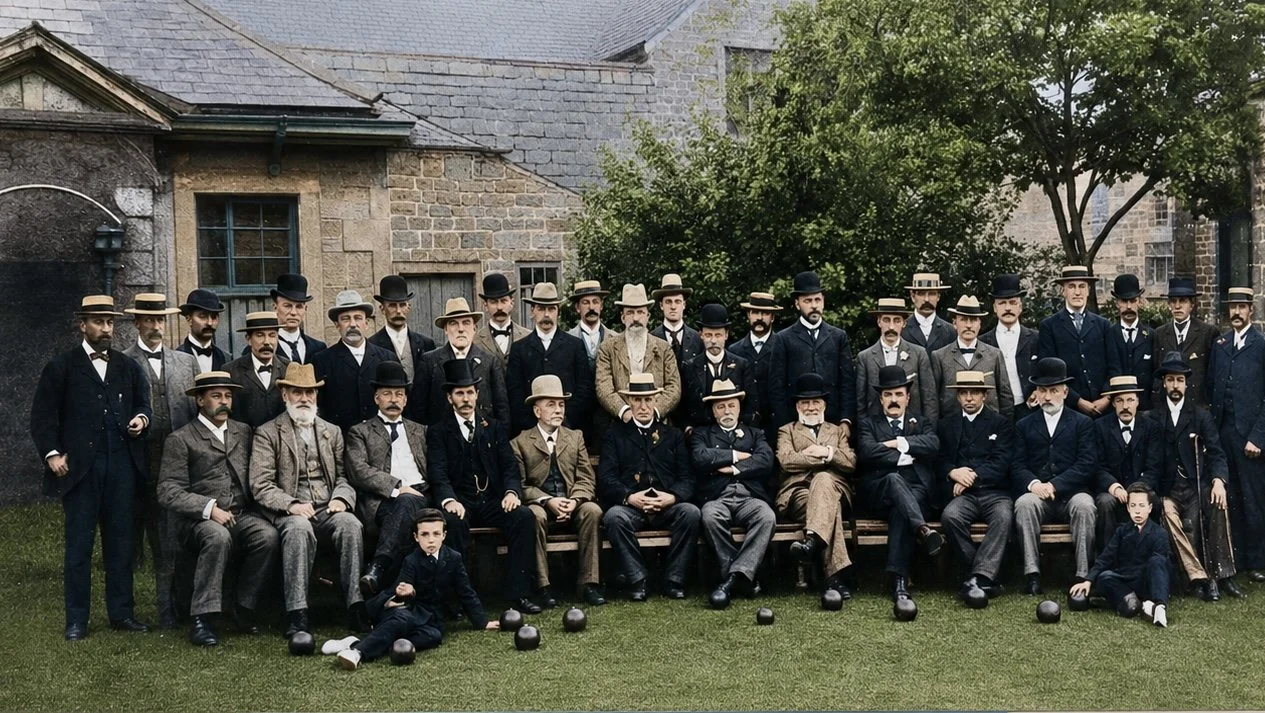
Mansfield Bowling Club, 1899. President W. Wilkinson and Vice-President A. Parker are among the forty members shown. (Source: Club Records)
By the late nineteenth century, Mansfield Bowling Club was already a flourishing and well-established organisation for men.
A remarkable group photograph from 1899 records more than forty members and club officers, including President W. Wilkinson and Vice-President A. Parker. The photograph reveals a mature and prosperous club whose traditions were already deeply rooted.
The club occupied its historic green behind the Bowl in Hand public house on Leeming Street, a peaceful setting that would remain its home for well over a century.
1905–1914 · Success in the Edwardian Era
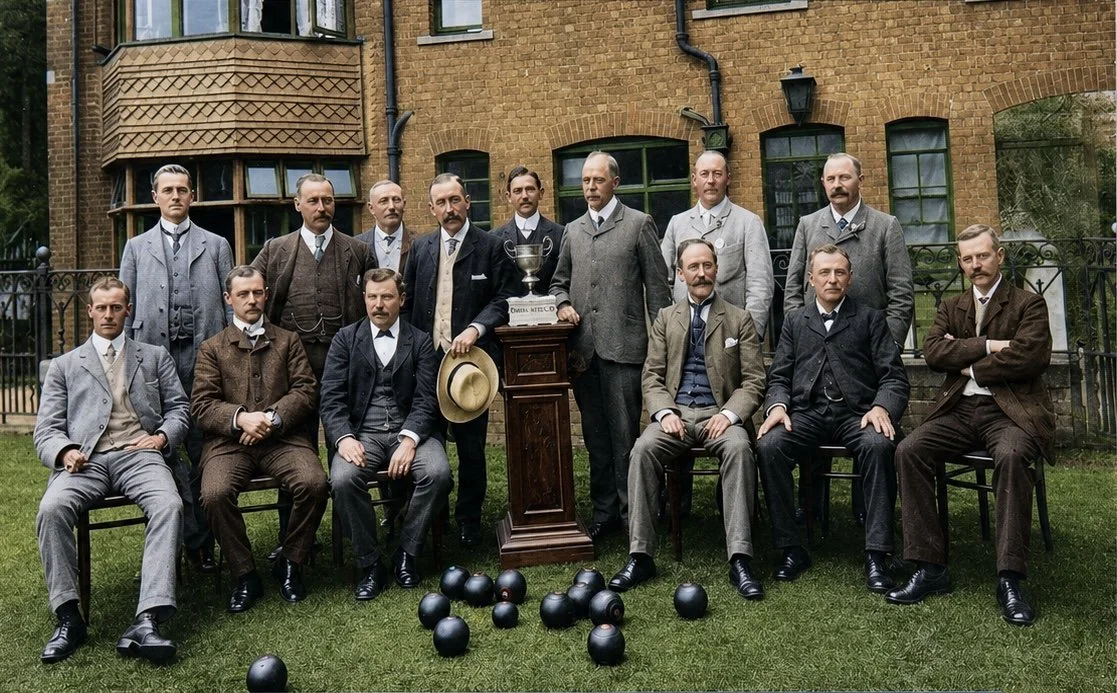
Mansfield Bowling Club, 1905 being presented with the Mansfield & Newark Bowling Challenge Cup (Source: Club Records)
At the beginning of the twentieth century the club continued to prosper. In 1905, Mansfield won the Mansfield and Newark Bowling Challenge Cup, presented by James King Esq. two years earlier. The surviving photograph of the victorious team provides a fascinating glimpse into the club during the Edwardian period and records the names of many members whose contribution helped shape the club's future.
In July 1914, just days before the outbreak of the First World War, Mansfield Bowling Club held its first Ladies' Day, demonstrating the social importance of the club and the central role it played in community life.
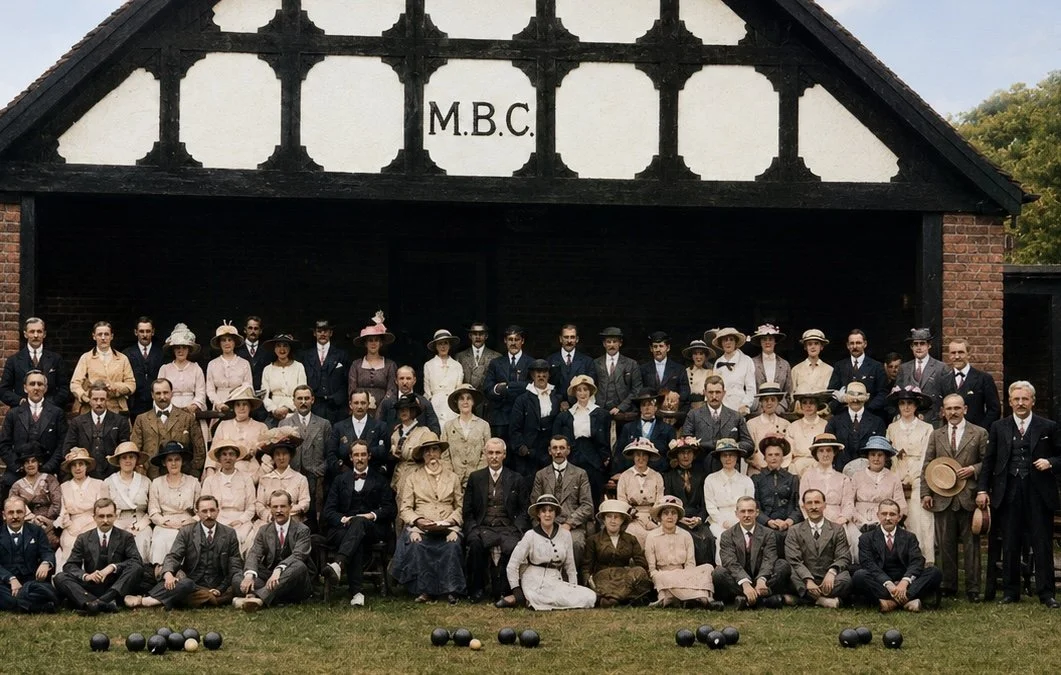
Mansfield Bowling Club, First Ladies Day 15th July, 1914. (Source: Club Records)
1914–1950 · Through Two World Wars
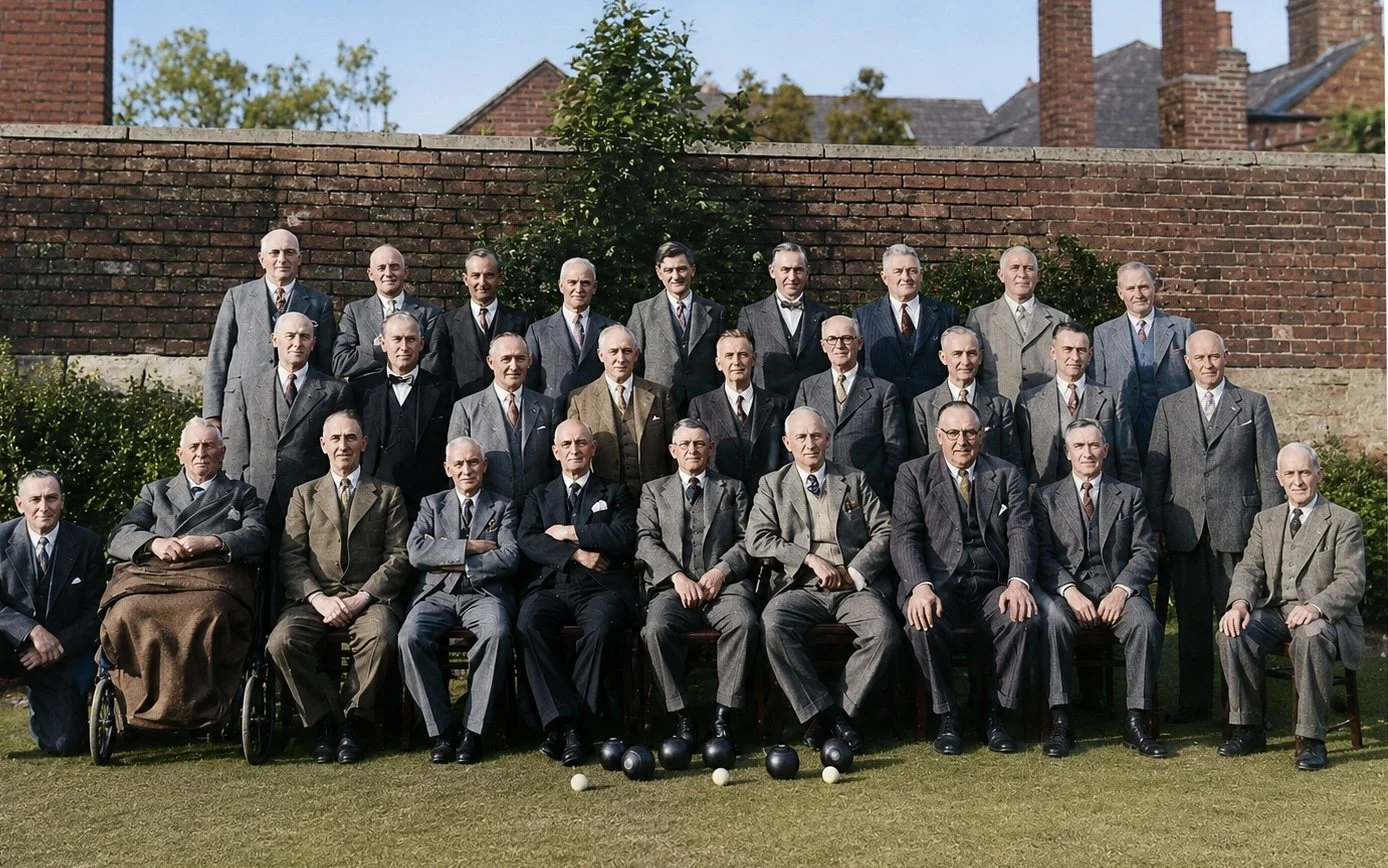
Mansfield Bowling Club, 1938. President S. J. Easter and Vice-President B. Meggit are among the twenty eight members shown. (Source: Club Records)
The club survived the upheavals of two world wars and continued to thrive throughout the twentieth century. Team photographs from 1938 and 1950 show a strong and active membership, while newspaper reports and competition records confirm the club's continuing importance within Nottinghamshire bowls.
Many members devoted decades of service to the club, creating a spirit of friendship and continuity that became one of its defining characteristics.
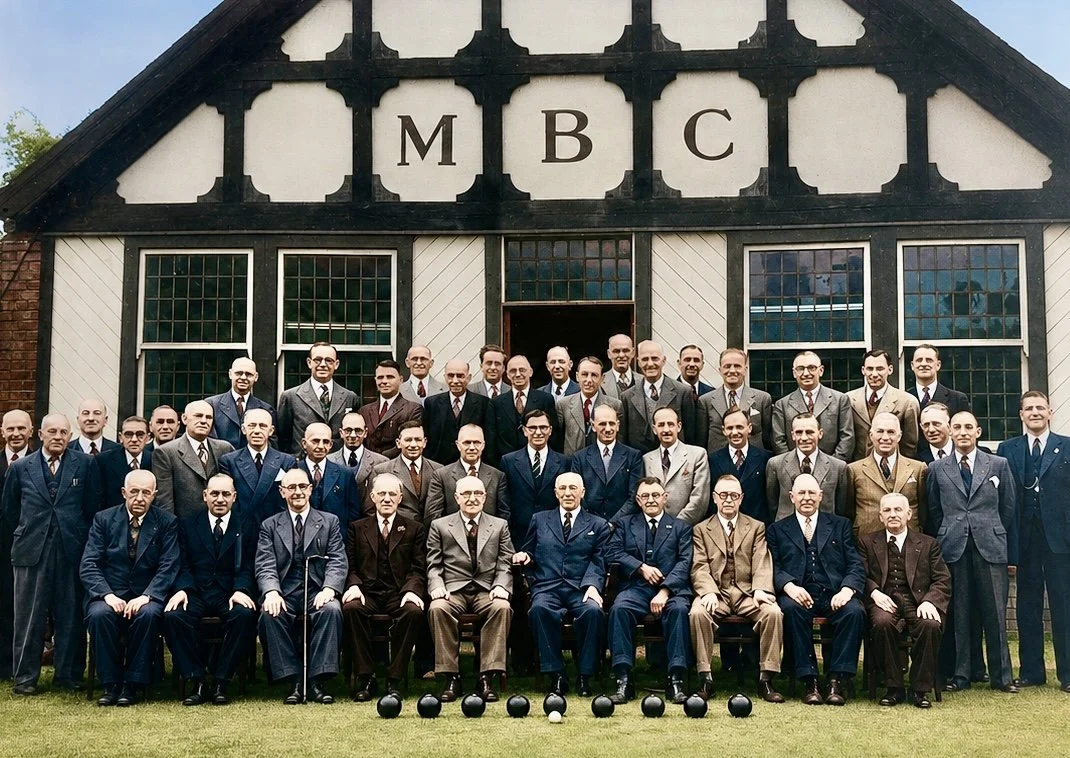
Mansfield Bowling Club, 1950. President W. H. Hare and Vice-President D. Jamieson are among the over fifty members shown. (Source: Club Records)
Early 2000s · The Final Years at Leeming Street
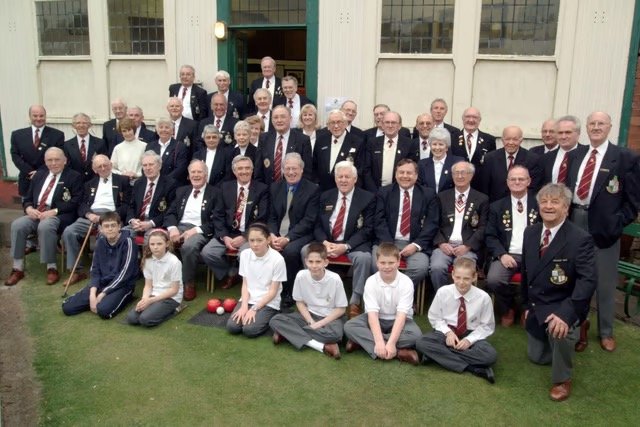
Mansfield Bowling Club, 2003. MBC Members and junior bowlers gather outside the historic pavilion at Leeming Street for an Open Day. Taken just a few years before the move to the club's present home. (Source: The Chad)
The Final Years at Leeming Street
By the beginning of the twenty-first century, Mansfield Bowling Club continued to flourish at its historic home behind the Bowl in Hand. A photograph taken in 2003 shows members alongside younger bowlers outside the distinctive pavilion, demonstrating the club's commitment to passing on its traditions to future generations.
Although the surroundings had changed considerably since Victorian times, the spirit of friendship and community that had defined the club for more than three centuries remained undiminished. For generations, the Leeming Street green had been one of Mansfield's hidden treasures. Originally surrounded by orchards, it later witnessed the construction of the Court House, jail, shops, the Palais and, finally, the multi-storey car park that overlooked the green. As the town evolved, the club preserved a unique piece of Mansfield's sporting heritage while maintaining its traditions.
However, the club was also facing challenges. Fewer new members were joining, while many older members were no longer actively bowling, raising concerns about its long-term future. The introduction and expansion of a junior section provided encouragement, while the Committee recognised that obtaining charitable status could further strengthen the club's position.
Another significant development was the recruitment of women as members, transforming what had previously been a men-only club. Together with the growing junior section, this brought renewed energy and enthusiasm, providing what Graham Headworth described as a much-needed "shot in the arm" for the historic club.
Despite this renewed vitality, it became increasingly clear that the historic site could no longer provide the peaceful setting or facilities the club required. The Committee began exploring alternative locations, determined to secure the club's future while preserving the traditions that had made it such an important part of Mansfield's sporting life.
Securing a New Home
The search for a new home was closely linked to the complicated history of the club's ownership and lease arrangements.
For many years, Mansfield Bowling Club had occupied land behind the Bowl in Hand under a renewable lease originally granted by Mansfield Brewery. Following the resolution of the legal position surrounding the lease, discussions took place with Wolverhampton and Dudley Brewery, which had acquired Mansfield Brewery. According to the club's historical records, the brewery subsequently agreed to sell the site to Mansfield Bowling Club.
The former bowling green eventually passed into the ownership of Queen Elizabeth's Endowed School Trust, and the arrangements surrounding the old site helped make the club's relocation possible.
By the early twenty-first century, the Committee had explored several possible locations before reaching an agreement with the Trust to develop a new home on land adjoining the school on Chesterfield Road South.
In 2009, Mansfield Bowling Club moved from its historic Leeming Street home to the new bowling green and pavilion on Chesterfield Road South. The move marked a major milestone in the club's history, providing modern facilities and new opportunities for members while preserving its longstanding traditions of friendship, competition and community involvement.
A New Chapter for Mansfield Bowling Club
Having been satisfied that club members would make a substantial financial contribution towards the construction of the new pavilion and bowling green, Queen Elizabeth's Endowed School Trust agreed to meet the remaining costs of the development. The Trust also granted Mansfield Bowling Club a 99-year lease, providing long-term security for its new home and helping to ensure that the club's proud traditions could continue for generations to come.
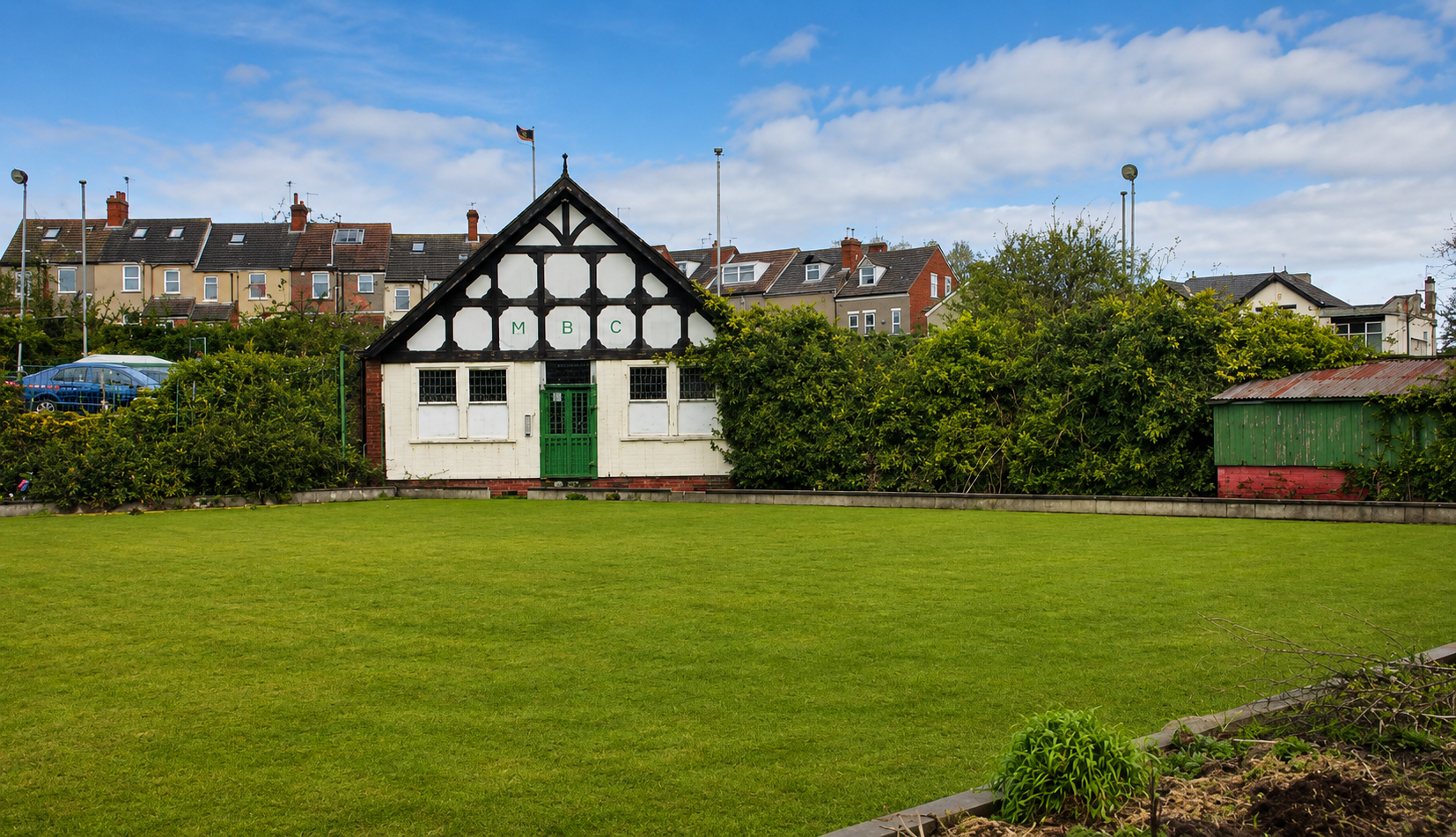
The historic Mansfield Bowling Club pavilion and bowling green at Leeming Street, shortly before the club's relocation to Chesterfield Road South in 2009.
2009 - Present · Rebuilding for the future
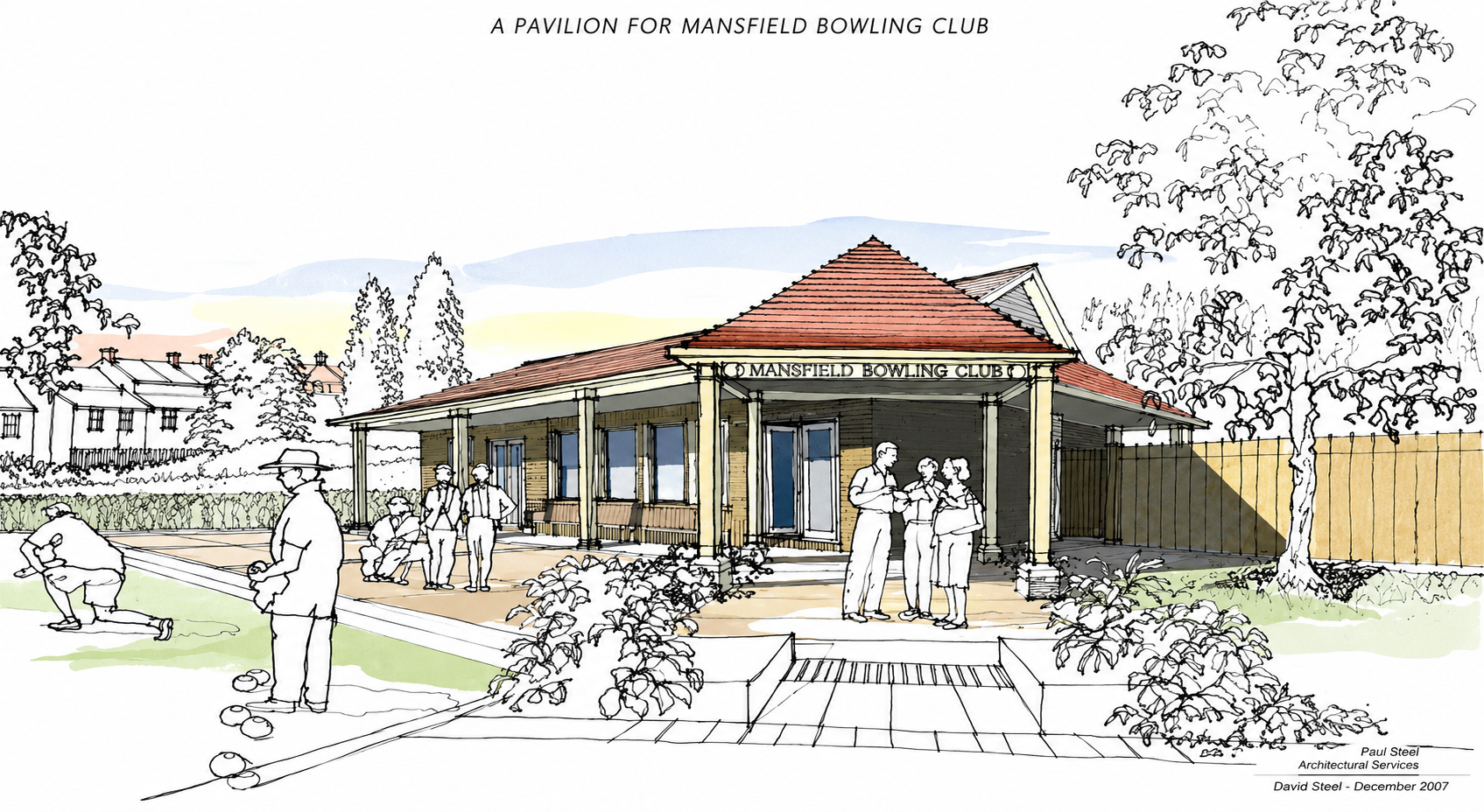
The project became one of the most ambitious in the club's history. Led by Graham Headworth, Secretary of the Development Sub-Committee and Project Leader, members secured major grant funding of more than £200,000, alongside additional support from local businesses and organisations. Queen Elizabeth's Trust contributed further funding towards the development, while Mansfield Standard Sand Company donated thousands of tonnes of sand needed to level the sloping site before construction could begin.
Working alongside fellow trustees George Burke, Melvin Savidge and Mike Lake, together with Project Manager Nigel Tate and John Carter, Chairman of Queen Elizabeth's Trust, Graham helped turn the ambitious plans into reality.
In 2009, Mansfield Bowling Club moved to its new home on Chesterfield Road South. The purpose-built green and pavilion provided modern facilities while respecting the traditions of one of England's oldest bowling clubs. The development also reflected a forward-thinking approach to environmental sustainability, incorporating rainwater harvesting into its design.
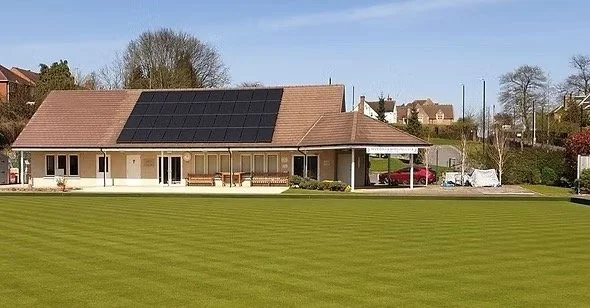
The club subsequently invested in solar energy, installing photovoltaic panels on the pavilion roof with the assistance of further grant funding from the Energy Saving Trust. These panels continue to generate electricity and provide an income for the club, demonstrating its commitment to sustainable development.
As membership continued to grow, further improvements became necessary. In 2015, Mike Lake identified the need to extend the pavilion to provide improved catering facilities, additional storage and better amenities for an increasing number of members. Initial plans proved prohibitively expensive, but a revised proposal gained the support of the Queen Elizabeth's Trust. Working once again with Nigel Tate, architect Mike Hulme and the Trust's Board, an extension project was approved and construction began in October 2019.
Despite one of the wettest winters on record, gale-force winds and the disruption caused by the COVID-19 pandemic, the extension was completed and handed over during the summer of 2020. The improved pavilion ensured the club could continue to meet the needs of its growing membership while providing facilities worthy of its long and distinguished history.
Today, Mansfield Bowling Club stands as a testament to the vision, generosity and dedication of generations of volunteers. The efforts of those who preserved the club's heritage while securing its future have created a thriving sporting and community hub that continues to build on more than three centuries of bowling in Mansfield.
Historical note: The history of Mansfield Bowling Club has been compiled from surviving club records, contemporary newspaper reports, local history publications and contributions from past and present members. Particular thanks are due to Graham Headworth for his valuable contributions to the preservation and documentation of the club's history.
Where an exact date cannot be verified, approximate dates are shown using c. (circa), meaning "around".