The Origins of the Mansfield Bowling Club Crest
Established in 1700, we continue to provide friendship, competition and community for bowlers of all ages and abilities.
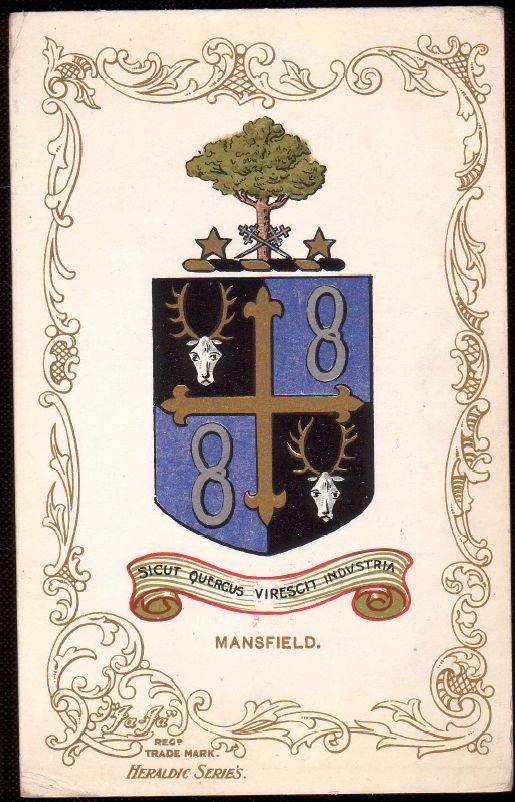
The arms as used on a JaJa postcard , 1905
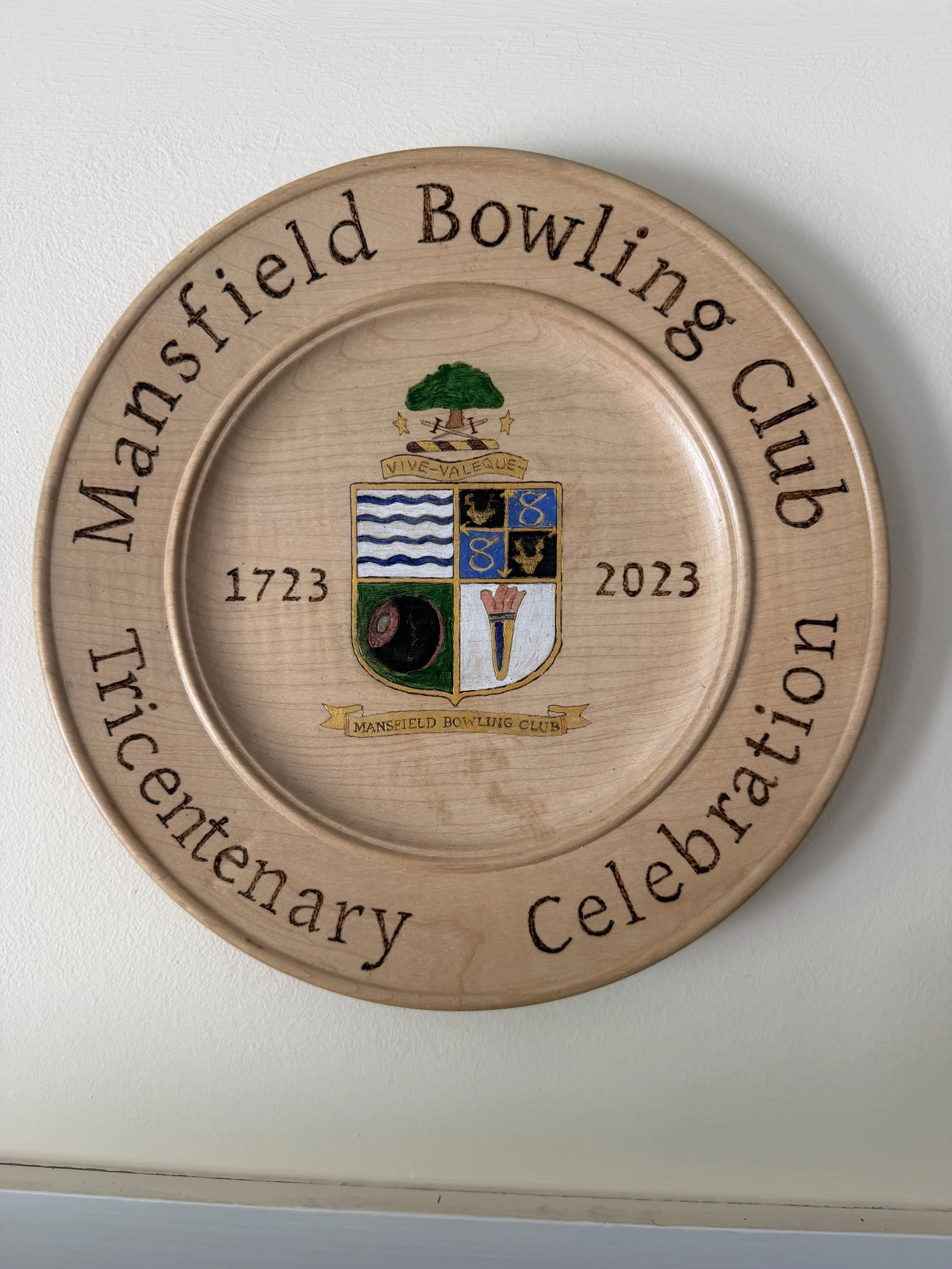
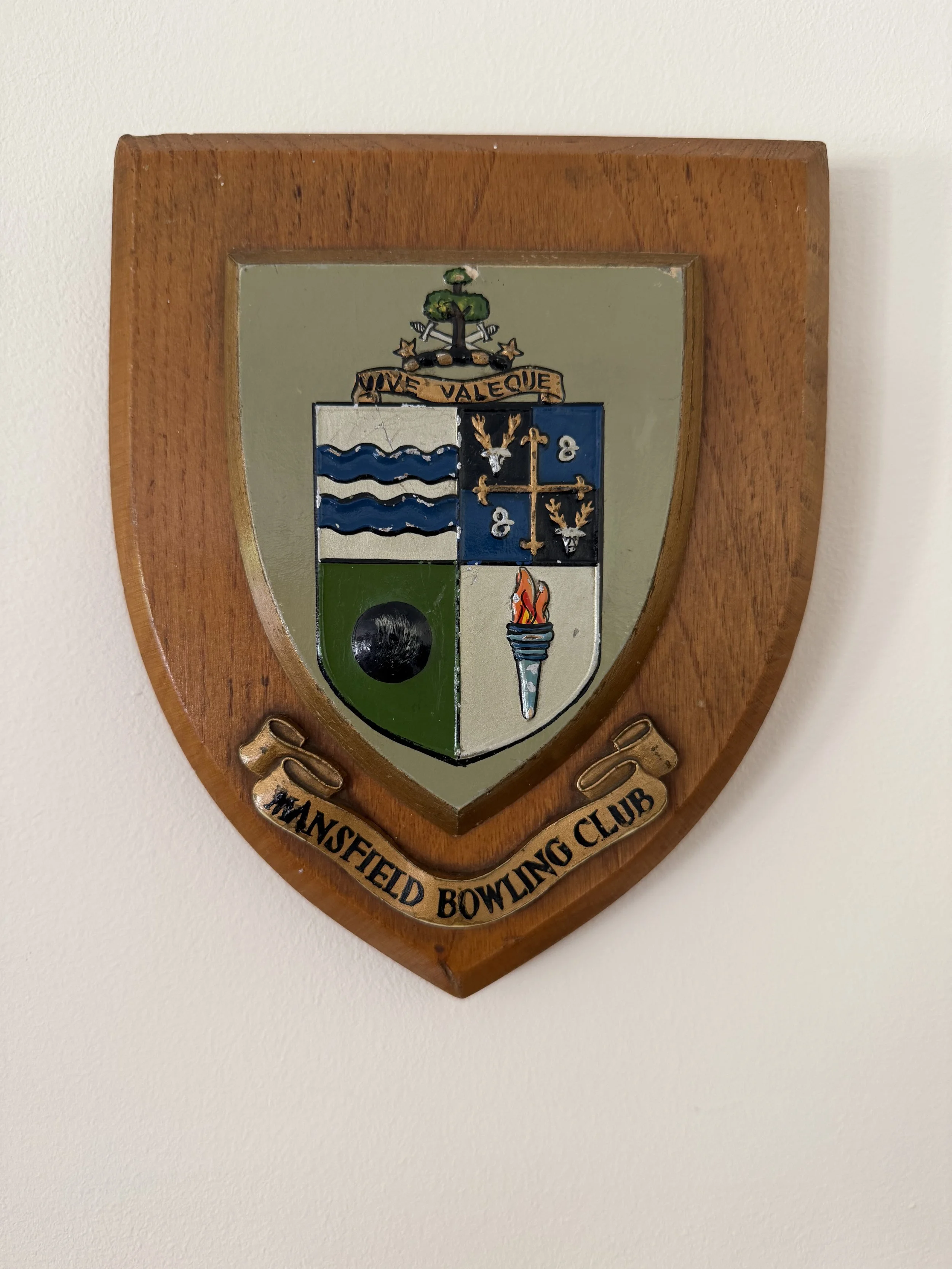
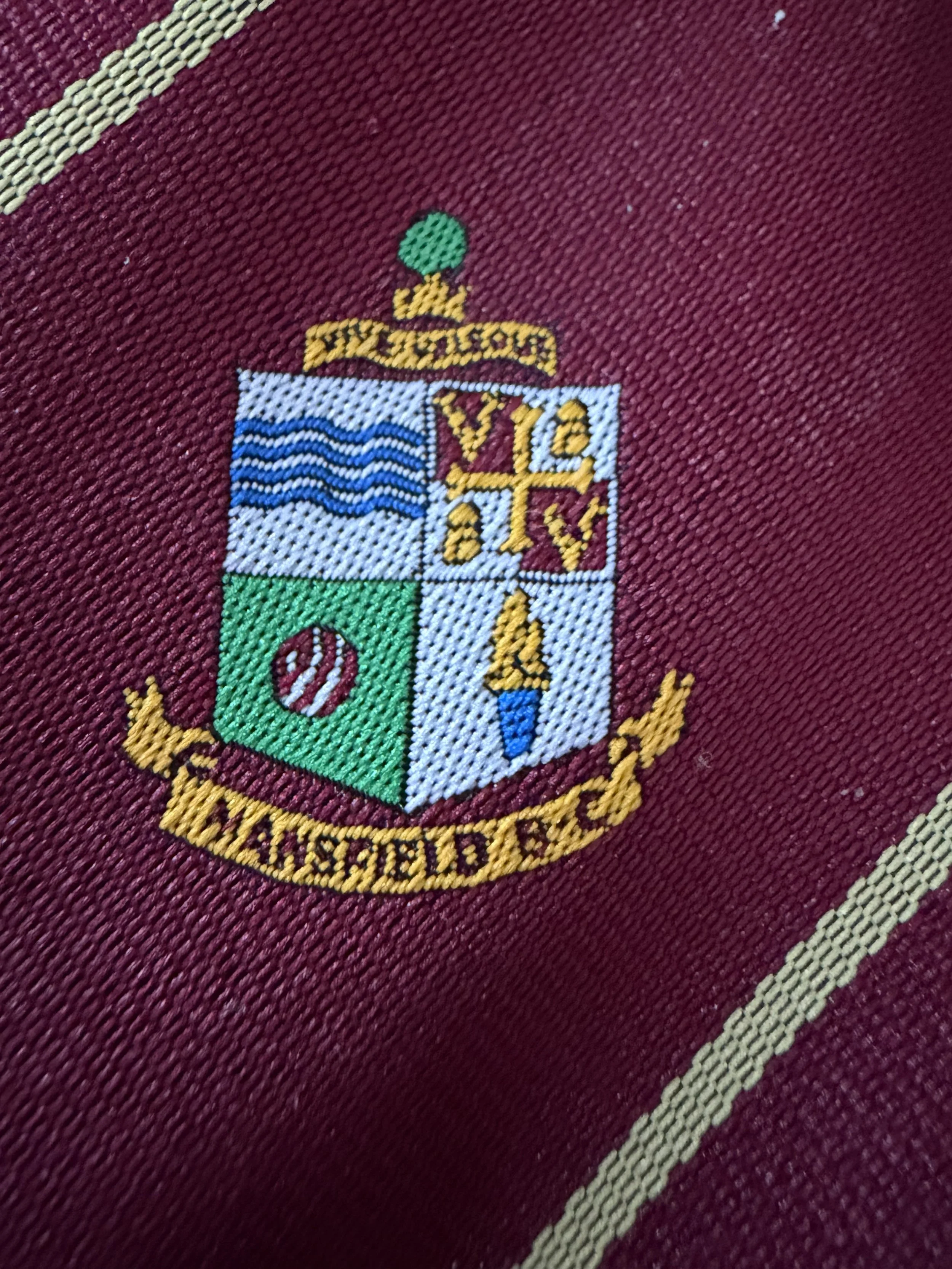
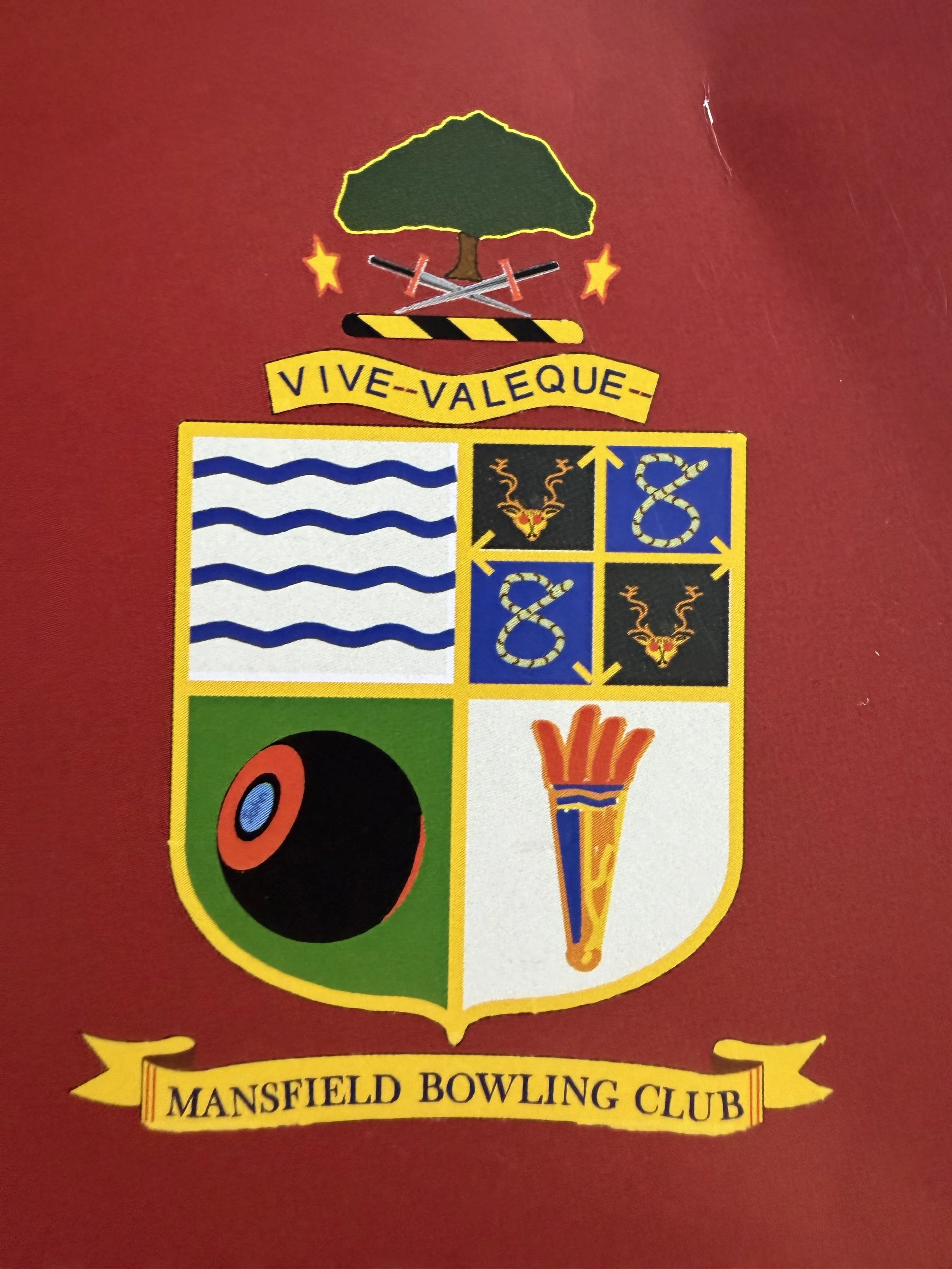
The crest of Mansfield Bowling Club is one of the most recognisable symbols of the club, appearing on ties, plaques, trophies, club clothing and, more recently, the club website.
Its origins can be traced to the historic arms of Mansfield Borough, granted in 1892. Over time these civic symbols were adapted and reinterpreted to create a distinctive emblem that reflected both the town's heritage and the sport of bowls.
Today the crest stands as a visual link between Mansfield Bowling Club and the community it has served since 1700.
The Mansfield Borough Arms (1892)
The story begins with the official Borough Arms of Mansfield, granted on 9 February 1892.
The arms were designed to represent the history, industry and traditions of the town. Every element was chosen for a reason:
The cross was taken from the arms traditionally attributed to King Edward the Confessor, during whose reign Mansfield was a Royal Manor.
The stag heads were adopted from the arms of the Cavendish-Bentinck family, Dukes of Portland, whose estates played a significant role in the area's history.
The cotton hanks represented Mansfield's industrial heritage.
The oak tree symbolised Sherwood Forest and the woodland character of Nottinghamshire.
The cross crosslets were taken from the arms of the Howard family.
The stars were derived from the arms of the Murray family, Earls of Mansfield.
Together these symbols formed a distinctive civic emblem celebrating the town's royal connections, local nobility, industry and landscape.
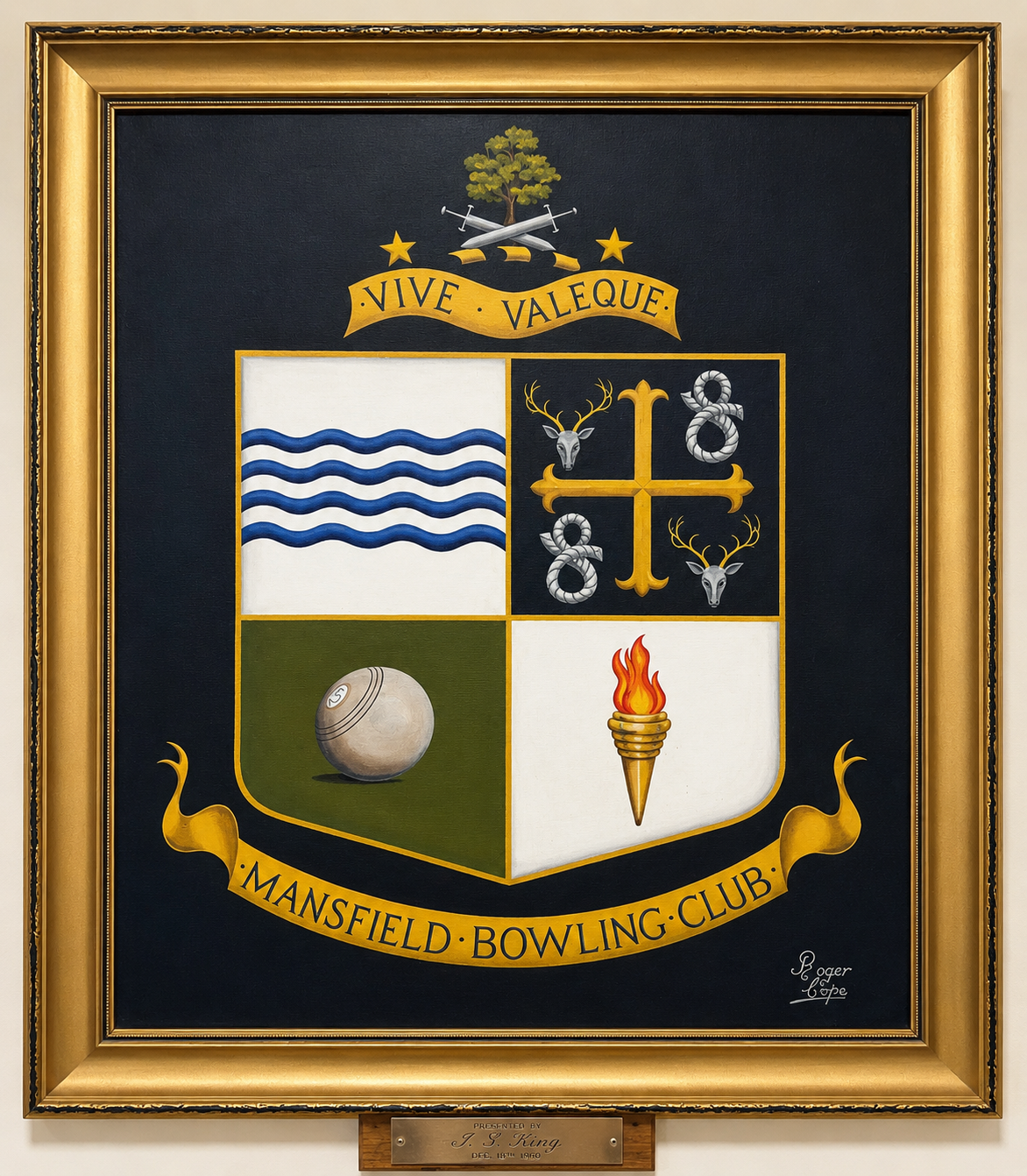
Depiction of the club Crest by Roger Cope (1975), presented to the club by A. J. Twigg, President.
Inspiration for the Club Crest
The similarities between the Borough Arms and the Mansfield Bowling Club crest are striking.
The club crest retains several key features from the Borough Arms:
The oak tree.
The stars (known in heraldry as mullets).
The crossed devices beneath the tree.
The overall heraldic style and arrangement.
These elements appear to have been adopted as a way of linking the club directly to the town whose name it bears.
Adapting the Design for Bowls
While drawing inspiration from the Borough Arms, the club also created a design unique to itself.
The most obvious addition is the bowling bowl displayed prominently within the shield. This immediately identifies the organisation as a bowling club while maintaining the traditional heraldic appearance.
Over time, some elements also evolved. Earlier heraldic references show cross crosslets beneath the oak tree, whereas the modern club crest displays crossed swords. Likewise, the shield has been simplified compared with the more complex quartered design of the Borough Arms.
These adaptations allowed the crest to retain its connection to Mansfield while creating a distinctive identity for the club.
The Oak Tree
The oak tree is perhaps the most prominent symbol in the crest.
Inherited from the Mansfield Borough Arms, it represents Sherwood Forest, one of Nottinghamshire's most famous landmarks.
The oak is also a traditional symbol of strength, endurance and longevity, qualities particularly appropriate for a club founded in 1700 and still thriving more than three centuries later.
The Stars
The two stars, known in heraldry as mullets, were inspired by the arms of the Murray family, Earls of Mansfield.
In heraldic tradition, mullets often symbolise honour, achievement and noble service.
Their inclusion helps preserve the crest's connection with Mansfield's historic heritage.
The Stag Heads
The stag heads originate from the arms of the Cavendish-Bentinck family, Dukes of Portland.
For generations the Dukes of Portland were among the most influential landowners in the area and played an important role in the development of Mansfield and the surrounding district.
Their inclusion acknowledges an important chapter in the town's history.
The Cotton Hanks
The figure-eight shaped symbols are known as cotton hanks.
These were taken directly from the Mansfield Borough Arms and represent the textile and manufacturing industries that helped shape the town during the nineteenth century.
Although often mistaken for decorative loops, they are an important reminder of Mansfield's industrial heritage.
The Bowling Bowl
The bowling bowl is the feature that transforms the design from a civic emblem into a sporting crest.
It places the game of bowls at the centre of the design and clearly identifies the organisation it represents.
It symbolises the sport that has united generations of club members since the club's foundation.
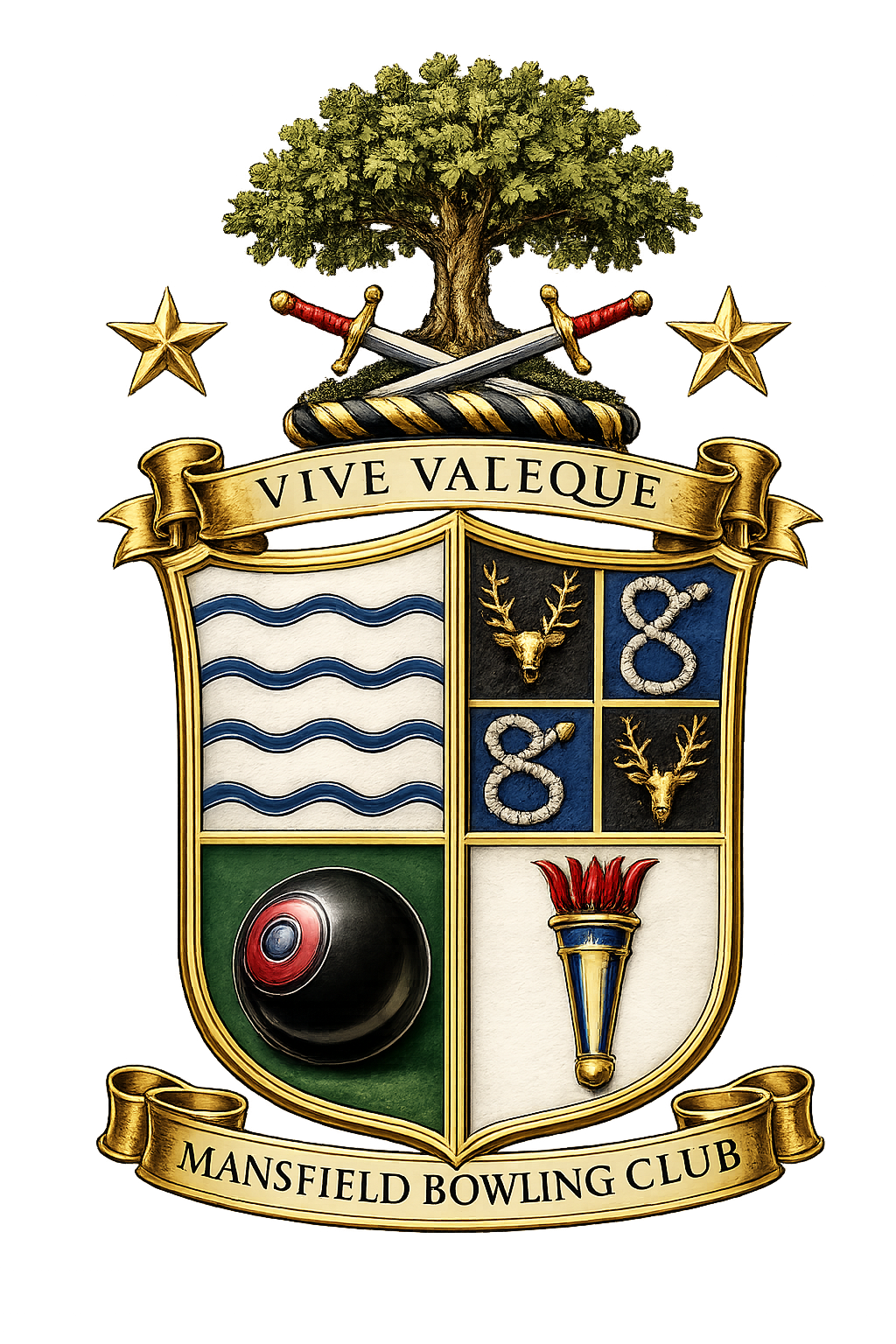
Modern Digital Interpretation by Chris Kennedy(2026), used in the creation of this site.
A Symbol of Town and Club
Today the Mansfield Bowling Club crest serves as a bridge between the club and the town it represents.
Drawing inspiration from Mansfield's Borough Arms, it combines local history, heraldic tradition and sporting identity into a single emblem. The oak tree recalls Sherwood Forest, the stars reflect historic noble families associated with Mansfield, and the bowling bowl proudly places the sport at the centre of the design.
More than a logo, the crest is a visual reminder that the club's history forms part of the wider story of Mansfield itself.
Variations of the Crest Around the Club